A restaurant robot can create several businesses around one sale. The robot maker may sell the machine, but other companies can earn money from setup, software, repairs, training, and finance.
The hard part is proving that a robot saves enough labor or raises enough output to cover those costs. Without a supplied evidence pack, this article gives no market prices or revenue figures; each operator must check the numbers for their own site.
Quick read
- Robot sales: Hardware is one part of the deal, not the whole business.
- Service work: Integration, cleaning, repairs, and staff training can produce repeat income.
- Proof before purchase: Operators need a clear task, baseline, and payback test.
Hardware is the first sale
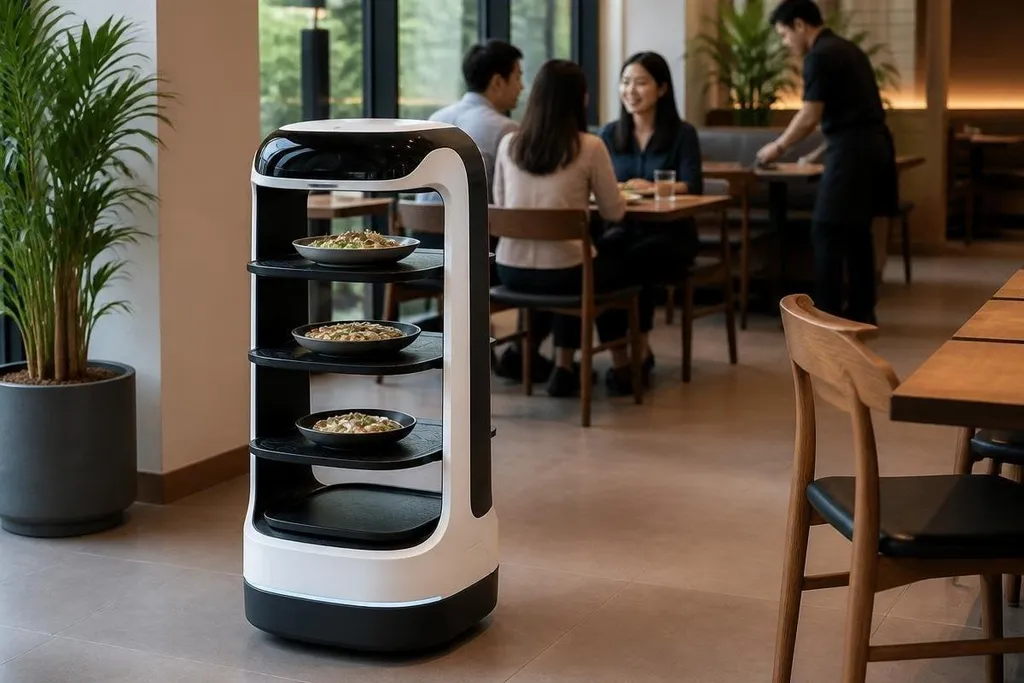
Restaurant robots can handle tasks such as carrying trays, moving food between kitchen and dining areas, or repeating steps at a preparation station. The business chance begins with machines built for one clear job, since a robot that needs constant human help can add work instead of removing it.
Hardware firms can sell the robot, charging for the base machine and any task-specific parts. Those parts might include a tray rack, a food container, a robotic arm, or a sensor package using LiDAR, which measures distance with light.
The sale also creates a need for site checks. A robot may need a smooth route, space to turn, access to a charging point, and a safe way to stop near staff and customers.
A company that maps the site and sets the route can charge for work that the robot maker may not want to handle.
Integration creates repeat work
Restaurants rarely run on one machine alone. Their point-of-sale system, kitchen display, staff alerts, doors, lifts, and payment process all affect how a robot fits into daily work.
That creates room for system integrators. They can connect the robot to order data, set delivery rules, and decide what happens when a table is blocked or a dish is late. The useful product is the working process around the robot, not a machine sitting in a corner.
The business case gets clearer when a real restaurant pays for the robot and keeps using it. Restaurant robotics reporting can tie that result to a named machine and task, giving integrators a basis for the software and support sold around it.
Software firms can sell scheduling tools, remote alerts, fleet controls, and reports on task time. Groups with several locations may also need one screen for machine status, fault messages, and service requests.
Service may outlast the sale
A robot works in a busy room with food, heat, spills, tight paths, and frequent cleaning. That setting creates ongoing work for technicians and specialist service firms.
A service contract could cover inspections, replacement parts, software updates, battery checks, and repairs. The exact offer depends on the robot, but the buyer should ask which parts are included and which costs extra.
Cleaning is another possible service. Food-contact parts may need a set cleaning routine, while sensors and wheels need checks that staff may not have time to perform. A company that trains staff and checks the work can sell a recurring service rather than a one-time visit.
Training has value too. Staff need to know how to load the robot, clear a blocked route, use the emergency stop, and report a fault. If those steps take too long, the restaurant may lose the labor savings it expected.
Finance and leasing change the buyer
The purchase price can block a small restaurant even when the task appears suitable. Finance companies can offer leases, rentals, or payments tied to an agreed service period.
That model shifts some risk from the restaurant to the seller and finance provider. It also makes the contract more important. The document should state the robot’s working hours, service response, software fees, damaged-part rules, and the process for ending the deal.
Revenue-sharing plans need extra care. A payment linked to orders or completed tasks sounds easy to measure, but the contract must define what counts as a completed task and who checks the record.
A practical test for the business case
Before a company builds a restaurant robot service, it should test one narrow task at one site. The following checks keep the plan tied to work that can be measured:
- Name the task. Write down the exact movement the robot must complete, such as carrying a filled tray from the kitchen to a service point.
- Record the baseline. Measure how long staff spend on that task during a normal service period.
- Count human touches. Log every load, unload, route change, cleaning step, and manual recovery.
- Price the full service. Include the robot, parts, software, training, repairs, finance, and site work.
- Set a stop point. Leave the deal if the robot needs too much staff time or misses the agreed task rate.
I’d back service and integration firms before another company selling a general-purpose robot without a narrow restaurant task. The machine has to work in the room, with the staff, and through the full service period before the wider business can grow.
The next useful proof is a paid deployment with a written task rate, service cost, and human recovery time. Until those figures exist for a specific restaurant, the opportunity is a plan, not a business.